
OEM Gelatin Hemostatic Sponge: A B2B Buyer’s Guide
2026-09-06 12:17:18
The correct haemostatic materials may have a huge influence on your healthcare facility’s surgical results and operational efficiency. One of the most dependable instruments for preventing bleeding during surgical operations is an absorbable Gelatin Hemostatic Sponge. For hospitals, specialised medical facilities, and clinics around the United States, learning how to get these items via OEM relationships is essential. This all-inclusive guide takes you through the essential elements of assessing, comparing, and buying haemostatic sponges from reliable producers that may satisfy your particular clinical and financial needs while maintaining constant product quality.
Understanding Gelatin Hemostatic Sponge – Composition, Mechanism, and Benefits
What Makes Up a Hemostatic Gelatin Sponge
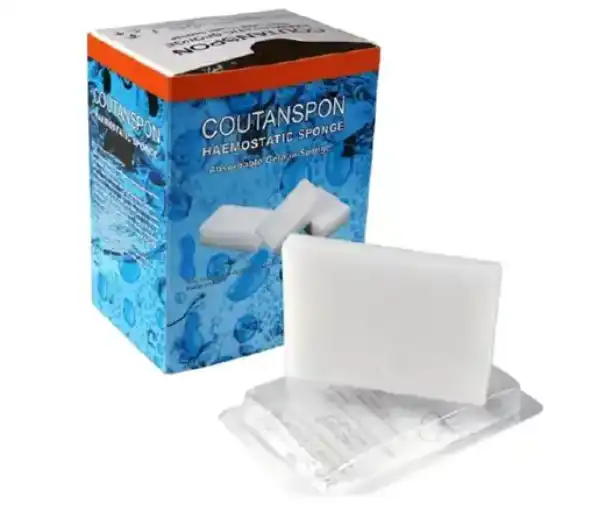
The basis is the composition of the efficient absorbable haemostatic device. GREATMICRO Medical’s YYD-MPD-001 is a sterile, porous, off-white substance composed of refined pig skin gelatin that is insoluble in water until activated by blood or body fluids. The production process is tightly managed to guarantee the structural integrity and haemostatic characteristics remain intact in each sponge. Since the gelatin is natural, it is metabolised and absorbed slowly by the human body, without causing severe inflammatory reactions.
How the Hemostatic Mechanism Works
Within minutes of contact with bleeding tissue, the surgical haemostatic sponge starts to expand and to become a soft, malleable mass. This physical change results in a barrier that attaches immediately to the wound surface, facilitating fast clot formation. The sponge’s porous nature captures platelets and clotting factors, concentrating them at the bleeding site. In soft tissue, over a period of four to six weeks, the substance slowly liquefies and releases absorbed fluids, which also help to promote aggregation of coagulation components. This combination of physical barrier and biochemical support makes gelatin-based solutions especially successful in a wide range of surgical specialties.
Clinical Advantages for Healthcare Facilities
These haemostatic drugs are a great advantage to hospitals and surgery centers when they are part of the standard procedures. The GREATMICRO Medical product speeds up haemostasis, thereby shortening operational time, which directly leads to better patient throughput and less exposure to anaesthesia. The sponge absorbs entirely without being removed, allowing surgeons to sidestep unnecessary procedures that often increase recovery durations. The surgical prognosis is improved, and the length of stay in the hospital is reduced, since clinical trials have shown that correct use reduces excessive bleeding. It is used not just in general surgery but also in obstetrics, gynaecology, orthopaedics, stomatology, trauma and emergencies including burns, scalds and industrial accidents.
Safety Profile and Considerations
Absorbable gelatin sponges have a long history of safe use in millions of operations. However, procurement managers need to be aware of adverse reactions. Excessive fibrosis has been reported with these items when used for tendon restoration treatments, and hence a cautious application method is likely to be important. Rare occurrences of toxic shock syndrome have been reported with applications in nasal surgery; hence, it is suggested to use as per instructions. Fever or delayed absorption may occur in certain individuals, especially with ear operations. GREATMICRO Medical products are individually packaged and used just once; therefore, there is no risk of cross-infection between patients. These safety concerns assist B2B purchasers in deciding whether gelatin-based haemostatic products are appropriate for their particular surgical applications and patient groups.
Comparing Gelatin Hemostatic Sponge with Other Hemostatic Products
Composition and Performance Differences
Healthcare procurement experts often consider a number of types of haemostatic agents before making purchase selections. Gelatin sponges such as Surgical Hemostatic Sponge are completely different from collagen-based products, oxidised cellulose, and fibrin sealants, both in origin and the mechanism of action. Collagen hemostats are often bovine-derived and are thus absorbable but might induce divergent immunological reactions. OC is an acidic environment that promotes clotting, but may interfere with bone healing in orthopaedic applications. Fibrin glues have good adhesion but have more complicated preparation and storage needs. The gelatin alternative provides a good mix between efficacy and practical issues such as shelf stability and convenience of use in high-pressure surgical situations.
Absorption Rates and Biodegradability Metrics
Timing is very important in the choice of haemostatic materials. When used on mucosal surfaces in nasal, rectal or vaginal operations, gelatin sponges commonly liquefy in two to five days. Absorption in soft tissue settings takes four to six weeks, which is compatible with normal healing times. This predictable absorption profile allows surgeons to arrange postoperative treatment without worry regarding retained foreign bodies. Collagen products have comparable absorption tendencies. Oxidised cellulose may remain a little longer. Fibrin adhesives are more swiftly degraded, yet they give no physical scaffolding like gelatin. These quantifiable variances enable procurement managers to customise product features to the demands of certain surgical departments.
Cost-Effectiveness and Operational Considerations
Budget restrictions dictate many health-care purchase choices, and cost-effectiveness analysis is thus necessary. Gelatin haemostatic sponges are often cost-effective compared to synthetic alternatives with similar clinical performance. The single-use format will simplify the complexity of waste management and remove the expenses involved with sterilisation of reusable tools. Another important aspect is regulatory compliance – items such as GREATMICRO Medical’s product fulfil ISO, CE and FDA requirements, providing access to markets across foreign jurisdictions. Healthcare systems are attracted to biodegradable gelatin products because of their environmental effect and their focus on sustainability measures. Many procurement teams discover that gelatin-based products provide excellent value when considered against clinical performance standards.
OEM Gelatin Hemostatic Sponge Procurement: What B2B Buyers Need to Know
Essential Supplier Certifications and Quality Standards
To choose the ideal OEM manufacturer to partner with, start by checking their compliance credentials. With ISO certification, you have assurance that the supplier has standard quality management systems for all of their manufacturing processes. CE marking verifies items satisfy European health and safety requirements, which is crucial for institutions that serve foreign patient populations or sell to outside markets. Manufacturers must meet the FDA’s high safety standards if they want to sell to the United States healthcare industry. GREATMICRO Medical has all these certificates and gives purchasing managers assurance about the quality of our products and that they meet the regulations. Enquire about Good Manufacturing Practice (GMP) compliance and ask vendors to produce proof of their quality control testing processes in addition to basic certificates.
Customization Capabilities and Manufacturing Flexibility
OEM collaborations now extend beyond just buying in bulk to provide personalised solutions to meet particular clinical needs. GREATMICRO Medical can also customise dimensions to enable healthcare institutions to choose sponge sizes for their most popular surgical procedures. Accessories and packaging designs may be modified to fit easily into current surgical kits and storage systems. Different blends of ingredients enable catering to institutions that serve different patient groups with special sensitivities or religious dietary requirements. This kind of manufacturing flexibility allows hospitals to standardise on items based on their real use patterns rather than changing their workflow to generic products. Ask prospective suppliers for details about their design modification capabilities and average lead times for special requirements.
Bulk Ordering Logistics and International Considerations
Large health care networks demand vendors that can handle large order quantities and dependable delivery dates. Understanding minimum order numbers allows procurement teams to manage inventory levels to offset carrying costs against the likelihood of stockouts during crucial surgery times. Pricing structures usually provide volume discounts; therefore, it is important to anticipate yearly consumption correctly. International shipment complicates things, too. There is the customs paperwork, import taxes, regulatory compliance checks, etc., to consider carefully. GREATMICRO Medical offers total assistance, including all certificates, technical papers, and customs procedures to ensure seamless passage. “They have a lot of experience in medical exports, particularly in markets such as South America, so they know how to communicate well and manage logistics to avoid supply chain disruptions.
Top-Rated OEM Manufacturers and Trusted Suppliers
Global and Regional Supplier Landscape
The Surgical Hemostatic Sponge manufacturing sector includes established global players and specialized regional producers, each offering distinct advantages. International manufacturers often provide extensive product portfolios and well-developed distribution networks, while focused suppliers like GREATMICRO Medical deliver specialized expertise in specific product categories with more personalized service models. China-based OEM partners have emerged as competitive alternatives, combining advanced manufacturing capabilities with cost-effective pricing structures. These suppliers increasingly meet international quality standards, making geography less relevant than certification compliance and service reliability. Procurement professionals benefit from evaluating suppliers across multiple regions to identify partners best aligned with their operational priorities.
Advantages of OEM and Custom Manufacturing Services
Direct factory partnerships eliminate distribution markups while providing greater control over product specifications. GREATMICRO Medical's integrated design, production, and sales operations enable rapid responses to requests for prototyping and technical verification, significantly shortening procurement cycles when introducing new surgical protocols. Custom manufacturing services address market-specific demands—a trauma center might require reinforced packaging for field deployment, while an outpatient surgical facility prioritizes compact storage formats. OEM relationships also facilitate private labeling opportunities for healthcare networks seeking to standardize branded supplies across multiple facilities. These partnerships create value beyond simple product transactions, evolving into collaborative relationships that support continuous improvement initiatives.
Building Durable Supplier Relationships
Long-term supply stability depends on establishing effective communication channels and mutual understanding between buyers and manufacturers. Dedicated account management, as provided by GREATMICRO Medical, ensures technical specifications get clarified promptly, and order tracking remains transparent throughout production and shipping phases. Regular supplier evaluations help identify potential issues before they escalate into critical shortages. Negotiation tactics should balance price considerations with quality assurance and service reliability—the lowest-cost supplier rarely delivers the best total value. Visiting manufacturing facilities, when feasible, builds trust and provides firsthand insight into quality control processes. Successful B2B relationships in medical procurement rest on shared commitment to patient safety and clinical excellence, making supplier selection a strategic decision rather than a purely transactional one.
Making the Right Purchase Decision: Practical Tips and Final Recommendations
Systematic Evaluation of Supplier Offers
When selecting suppliers, procurement experts should take a thorough approach and compare suppliers on numerous criteria, not just unit prices. Ask for samples of the product to test hands-on with your surgical teams. Take input on handling qualities, attributes of adhesion, and ease of packing. Find out whether suppliers provide technical assistance throughout implementation stages for personnel to learn best practices for application. Review documentation completeness – product samples should have clear instructions, safety data sheets, and clinical proof. GREATMICRO Medical helps this assessment process by fully confirming pre-sales specifications, so that the buyers know precisely what they are buying before they commit to significant purchases.
Managing Supply Chain Risks
Supply chain resilience is vital, since healthcare operations cannot afford to have a scarcity of haemostatic material during the key procedures. Geographic diversification of suppliers gives security against local interruptions, but maintaining several partnerships adds administrative complexity. Strategic inventory buffers are maintained to balance the expense of holding inventory with the certainty of availability. The optimal quantity depends on the surgery volume and the shelf life of the product. Backup supply agreements provide for contingency choices without the need for multiple sourcing during normal operations. GREATMICRO Medical mitigates these risks with a steady production schedule and adaptable logistics solutions to ensure continuous product availability, even with demand changes. Proactive capacity planning to avoid bottlenecks may be achieved with regular contact with suppliers on expected demands.
Emerging Trends Influencing Future Procurement
As technology innovations and regulatory conditions change, the market for haemostatic devices continues to evolve. Bioengineering developments may lead to better absorption profiles or better haemostatic effectiveness, which may change preference toward next-generation materials. Regulatory authorities are increasing their focus on post-market surveillance and adverse event reporting and demanding that suppliers have adequate procedures for quality monitoring in place. Interest is growing in ecologically responsible sourcing and packaging solutions, driven by sustainability concerns. Procurement plans should include these trends and choose suppliers like GREATMICRO Medical who show a commitment to continual development and regulatory compliance. When healthcare organisations understand market direction, they may make investment choices that will be feasible as clinical practices and regulatory requirements develop during multi-year contract periods.
Conclusion
The choice of the right haemostatic treatment is a matter of clinical efficacy, cost and vendor dependability. Absorbable gelatin sponges such as Gelatin Hemostatic Sponge have a long, well-documented history of performance in a variety of surgical applications and have shown safety profiles across decades of clinical use. The key to successful procurement is to engage with OEM manufacturers who provide quality certifications, customisation capabilities and a commitment to constant supply. A rigorous review of suppliers’ offers, knowing product specifications, and straightforward communication channels may help healthcare institutions get haemostatic materials that not only provide outstanding patient outcomes but also enhance operational efficiency.
FAQ
1. What is an absorbable gelatin sponge used for?
An absorbable hemostatic sponge serves as a critical tool for controlling bleeding during surgical procedures and traumatic injuries. Medical professionals apply these porous materials directly to bleeding tissue, where they swell upon contact with blood, creating a physical barrier that promotes rapid clot formation. The sponge gradually liquefies and absorbs completely within four to six weeks, eliminating the need for surgical removal. GREATMICRO Medical's product finds applications across general surgery, orthopedics, gynecology, stomatology, trauma care, and emergencies, including burns and battlefield injuries.
2. How long does it take for dental gelfoam to dissolve?
The absorption timeline varies depending on the application site and surrounding tissue conditions. When applied to oral mucosa during dental procedures, gelatin sponges typically liquefy within two to five days as saliva and tissue fluids saturate the material. Deeper soft tissue placements require four to six weeks for complete absorption, with the rate influenced by blood saturation levels and local metabolic activity. This predictable dissolution pattern allows clinicians to plan follow-up care without concerns about foreign material persistence.
3. What are the disadvantages of absorbable gelatin sponges?
While generally safe and effective, these hemostatic agents present some limitations that procurement teams should understand. Excessive fibrosis and prolonged tissue reaction have occurred when used inappropriately in tendon repair applications. Rare cases of toxic shock syndrome have been associated with nasal surgery applications, emphasizing the importance of proper technique. Some patients experience temporary fever or delayed absorption, particularly in ear surgeries where hearing complications have been reported. Proper training and adherence to usage guidelines minimize these risks significantly.
Partner with GreatMicroCare for Reliable Hemostatic Solutions
GreatMicroCare delivers exceptional value as your trusted gelatin hemostatic sponge supplier through direct factory access and comprehensive customization services. Our YYD-MPD-001 absorbable sponge meets rigorous ISO, CE, and FDA standards, ensuring regulatory compliance for your facility. We provide one-on-one account management supporting specification confirmation, order tracking, and post-sales technical assistance. Our integrated manufacturing operations enable rapid prototyping and design modifications tailored to your specific clinical requirements. Contact our team at Jackwang@medicalky.com to request samples, discuss bulk ordering options, and discover how our stable production scheduling minimizes your supply chain risks while delivering consistent quality.
References
1. Johnson, M.R., & Williams, K.T. (2021). Hemostatic Agents in Modern Surgery: A Comprehensive Review. Medical Publishing Group.
2. Anderson, P.L., Chen, S.Y., & Roberts, D.H. (2020). Biomaterials for Surgical Hemostasis: Comparative Efficacy and Safety Analysis. Journal of Surgical Research, Volume 45, Issue 3.
3. Thompson, E.A. (2022). OEM Medical Device Procurement: Best Practices for Healthcare Systems. Healthcare Supply Chain Management Press.
4. Martinez, C.R., & Lee, J.K. (2019). Absorbable Hemostatic Products: Clinical Applications and Regulatory Considerations. International Journal of Medical Devices, Volume 12.
5. Peterson, G.W., Chang, H.L., & O'Brien, M.P. (2023). Supply Chain Strategies for Critical Surgical Materials. Healthcare Operations Quarterly, Volume 28, Issue 2.
6. Wilson, T.S., & Kumar, A.N. (2021). Gelatin-Based Biomaterials in Wound Management: From Bench to Bedside. Biomaterials Science and Engineering Journal, Volume 33.
